Initiation and Brief Overview
The department of Sanskrit started its journey with B.A. Pass programme in 1961 and Honours in 1976. At present, the Sanskrit Department has a three-member faculty (one Associate Professor, one Assistant Professor and one Monastic Faculty). Consecutive good academic record inspires both the teachers and the students of the department.
The department offers Four-year Undergraduate Honours and Minor, AEC and SEC programmes in Sanskrit (NEP, 2020). It is the endeavor of the department to provide proper grounding to students in areas like Functional Sanskrit and Metre; History of Sanskrit Literature; Poetics; Drama, Prose, Poetry and Dharma-shastra; Paninian Grammar; Vedic Studies; Philosophy of Grammar and Linguistics; Indian Philosophy; Alankara-shastra; Indian Epigraphy, Paleography and Chronology.
Vision and Outlook
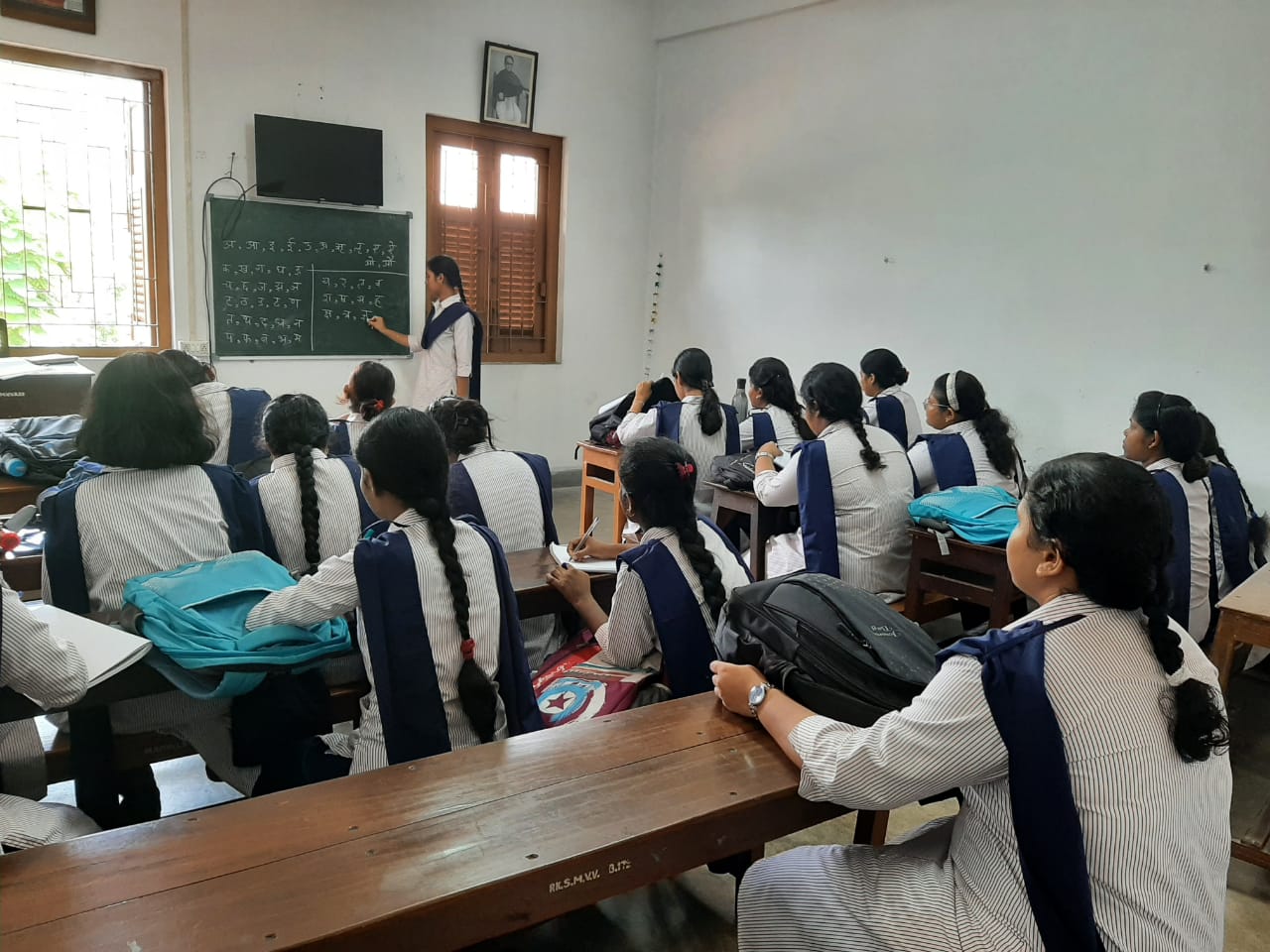
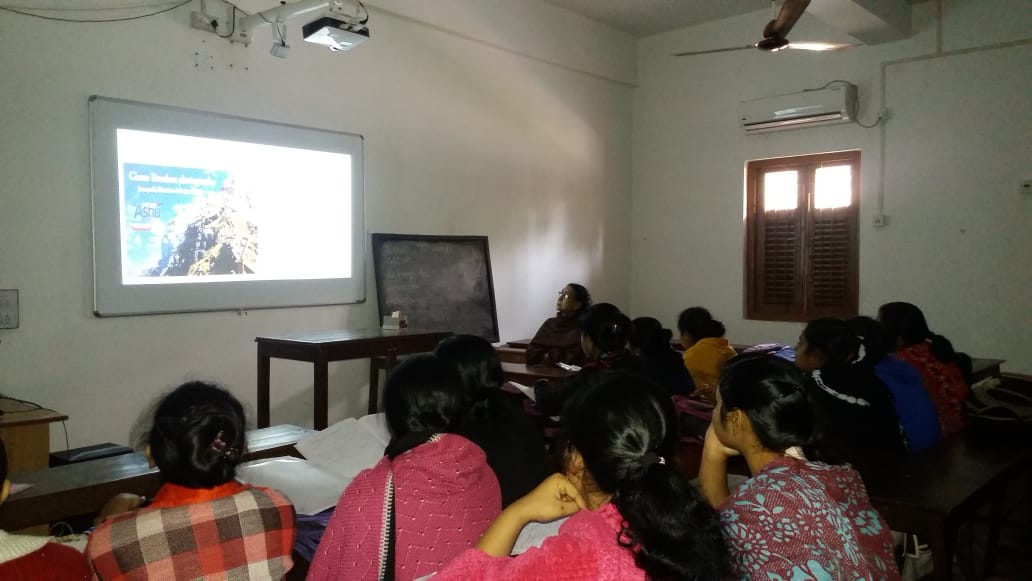
Sanskrit is an ancient and classical language of India. A perfect blend of our ancient knowledge and ethics as well as latest modern methods and techniques have been inculcated in our students in order to make them efficient enough to apply the ancient knowledge in the modern perspectives with the help of modern techniques. The department wants to provide confidence as well as opportunity to the young learners. The subject has got new opportunities today and students need to be enthused to join the discipline and explore its broader horizon. In accordance with the larger discipline of our College, the entire syllabus (opted for teaching) is completed before the semester exams take place.
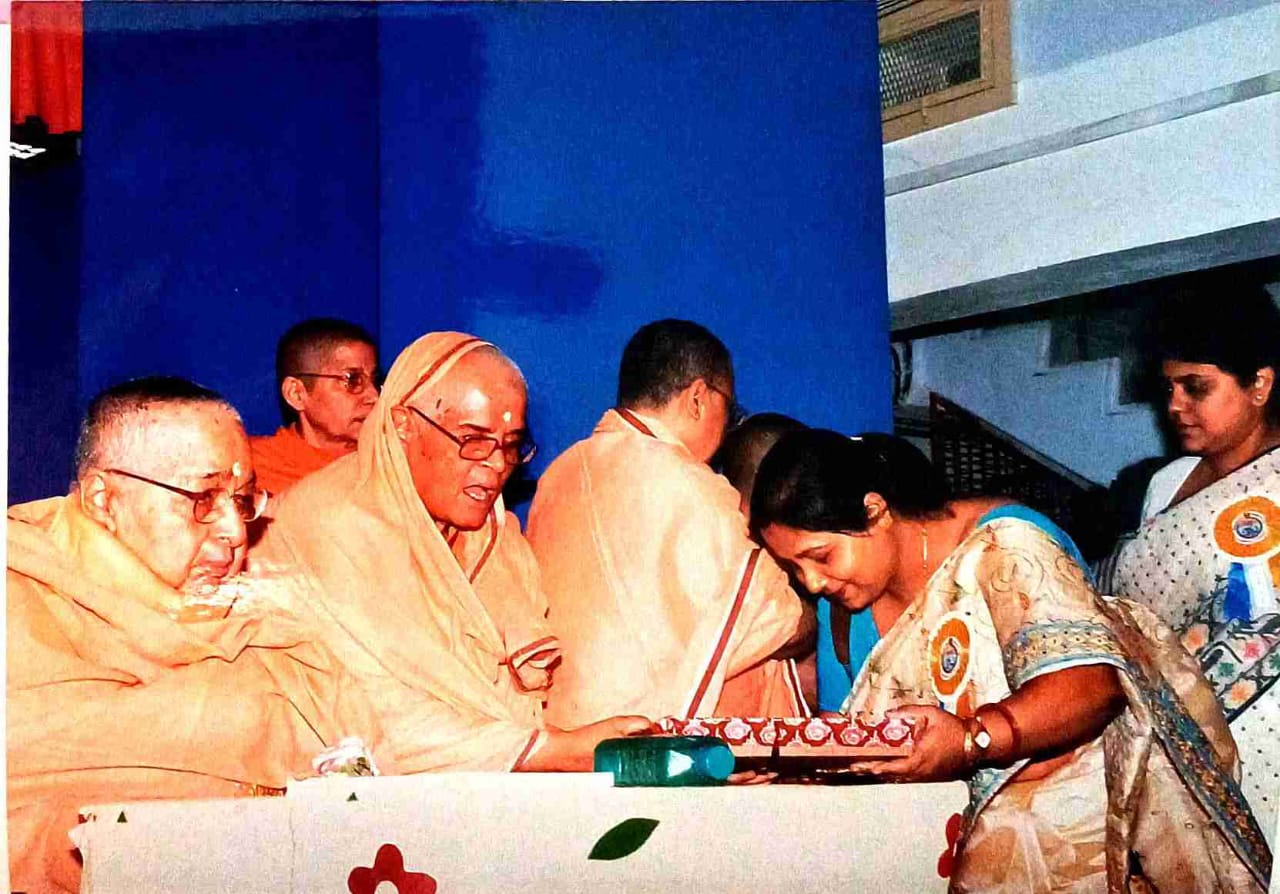
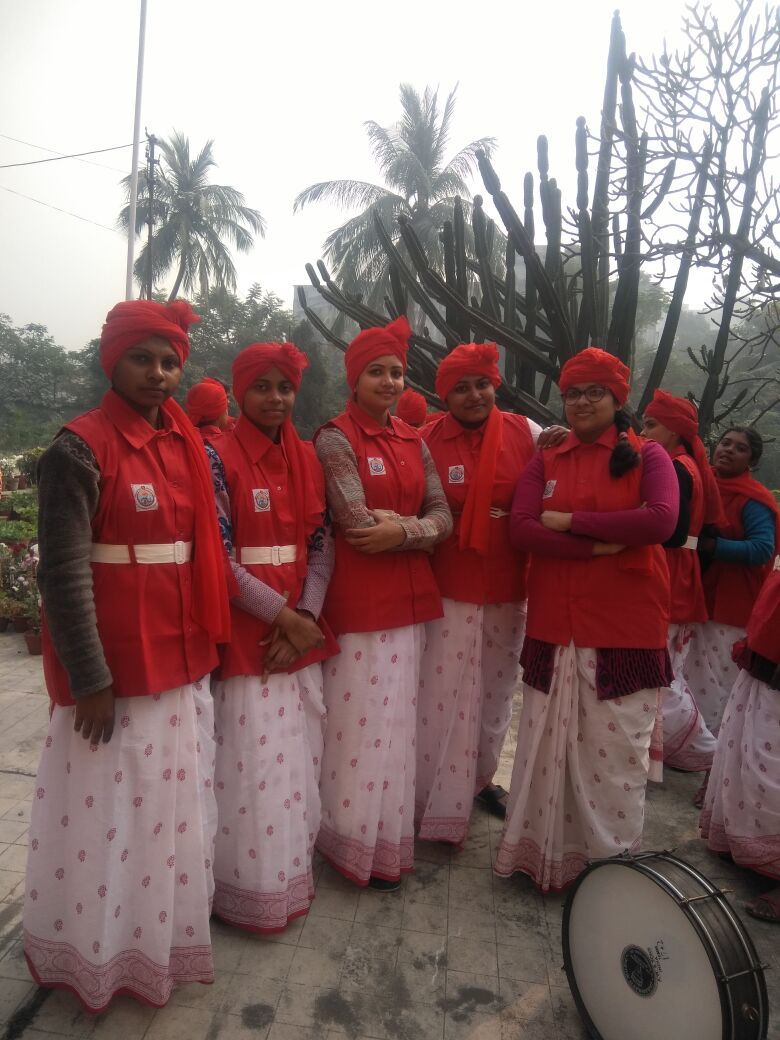
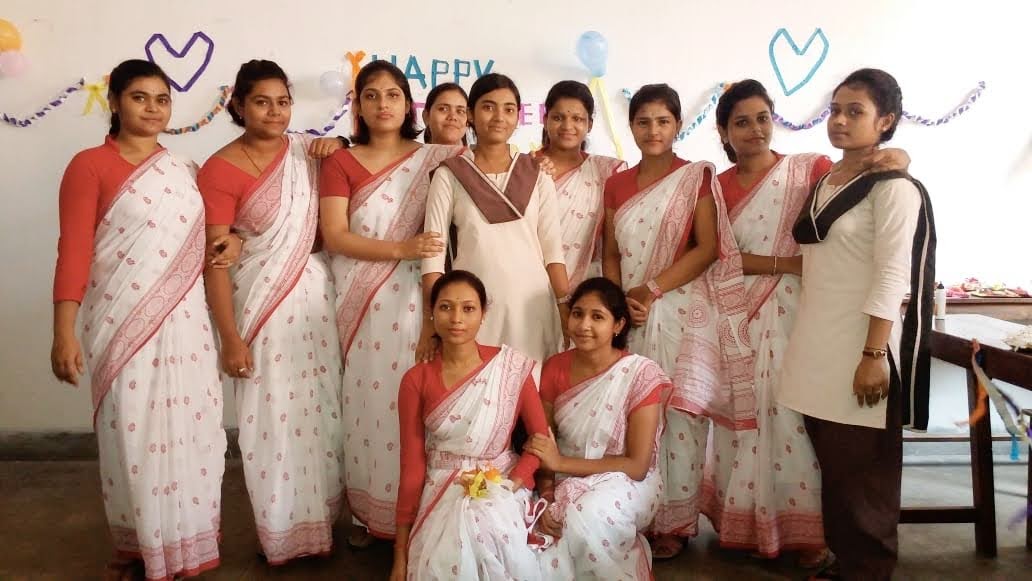
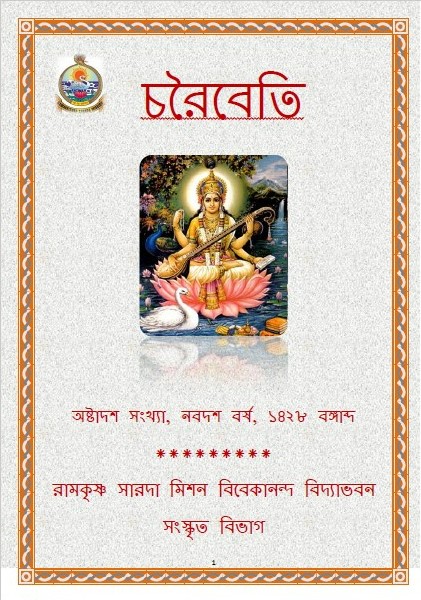
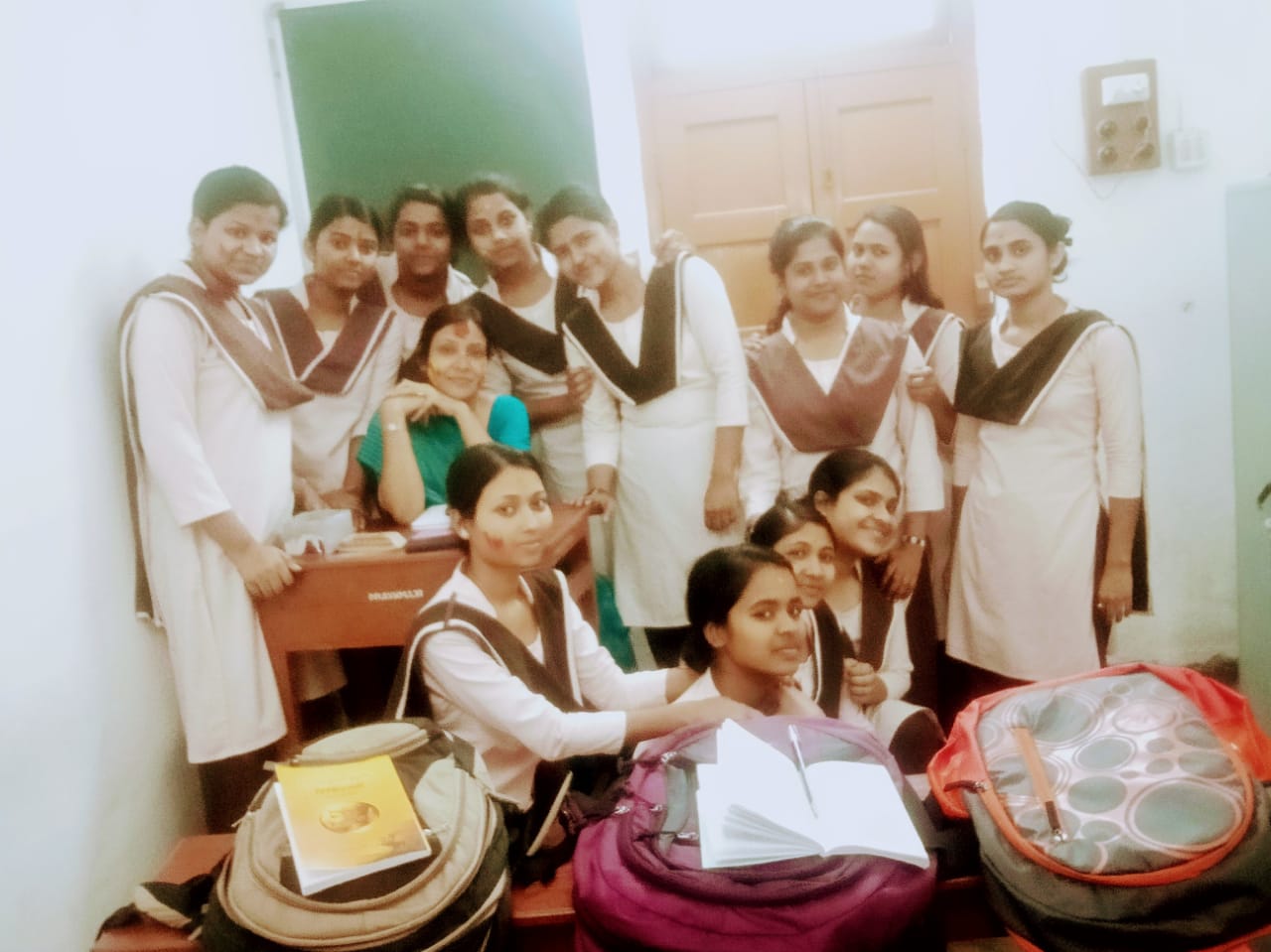
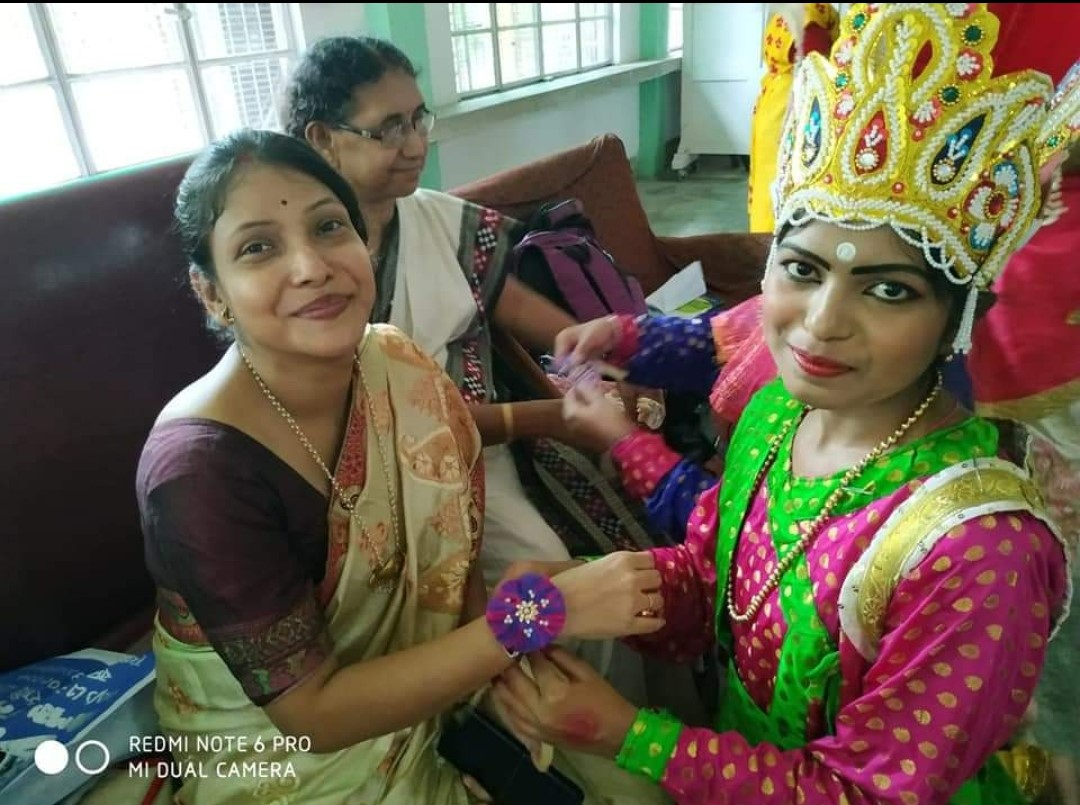
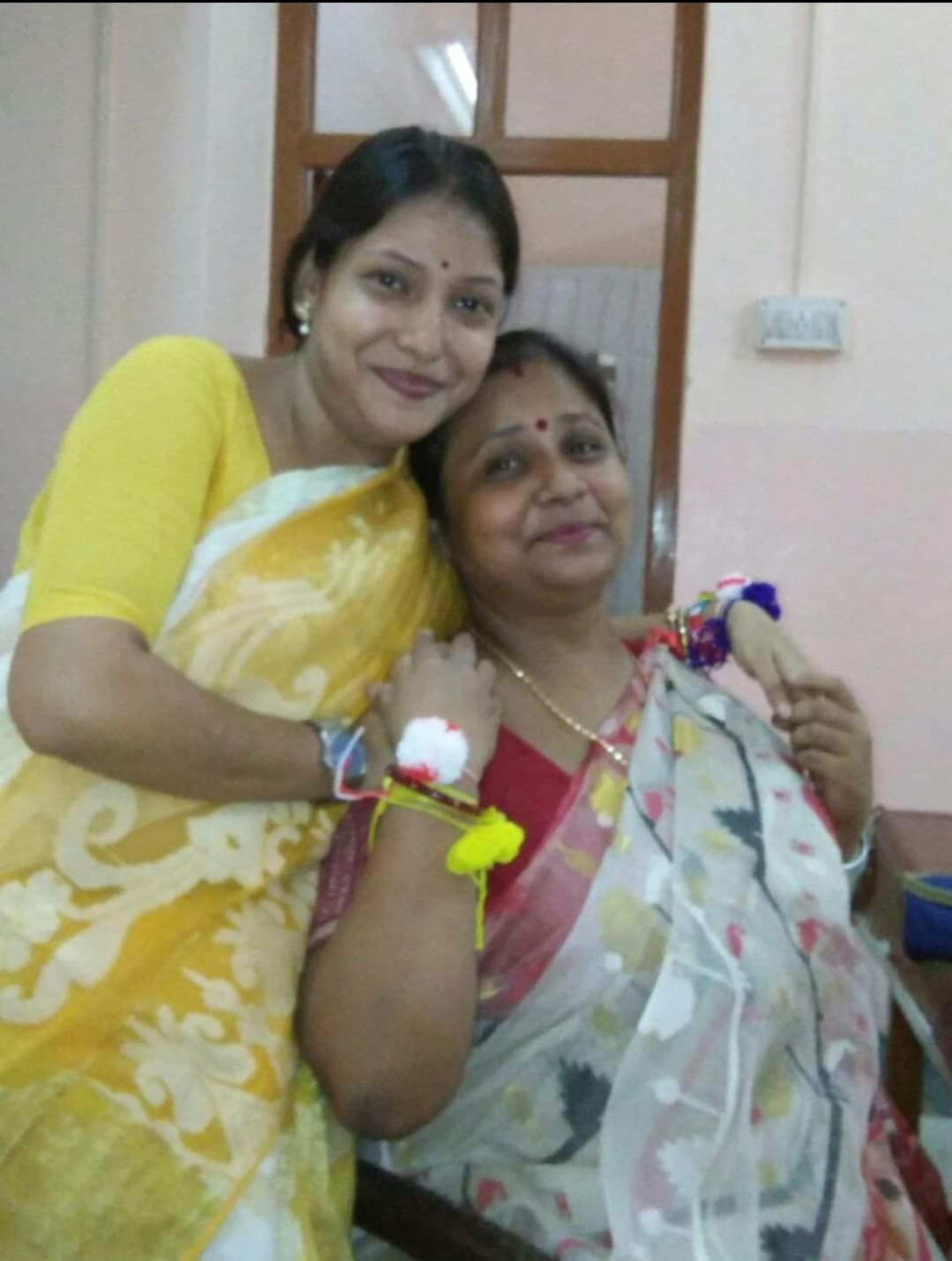
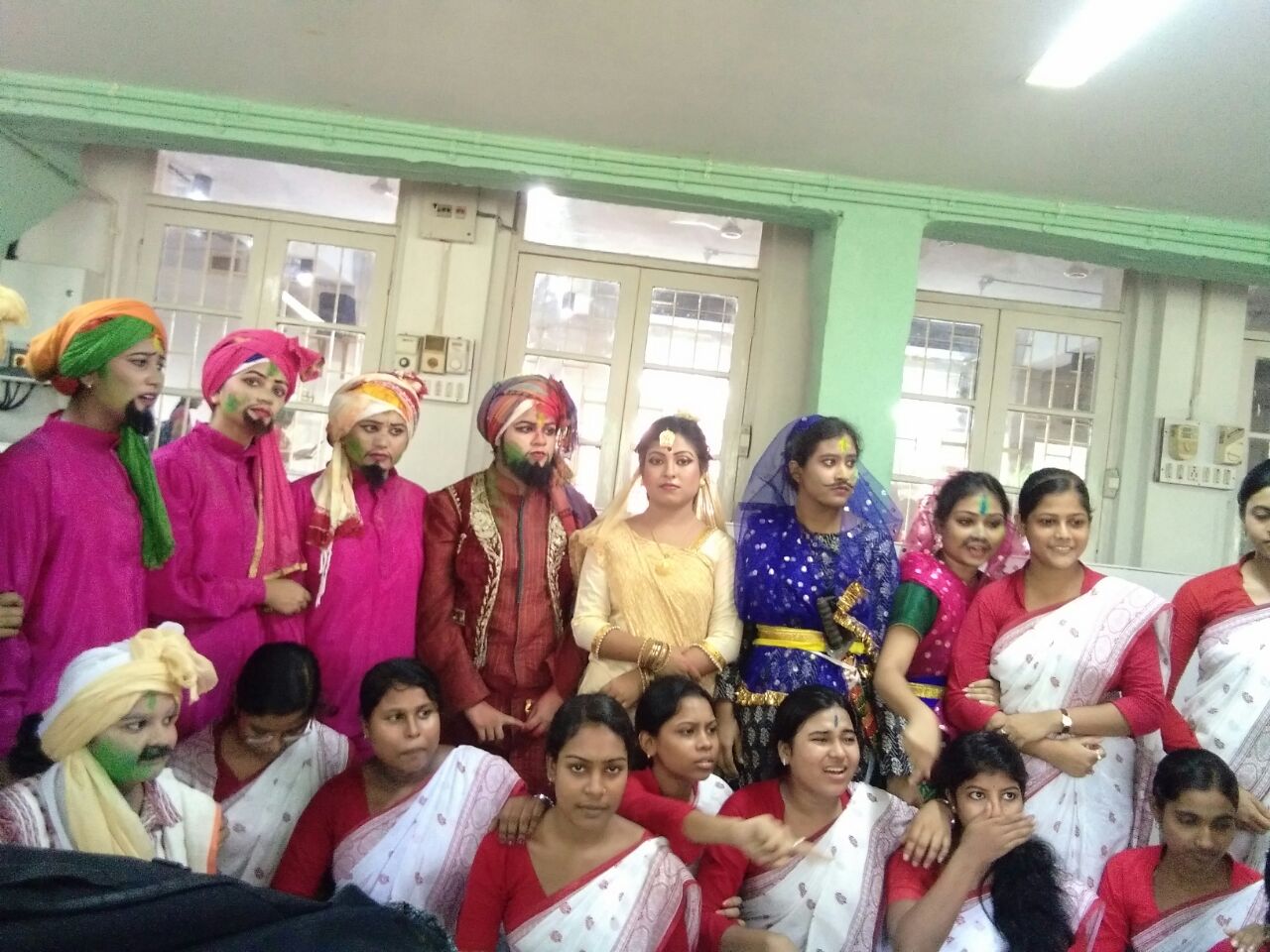
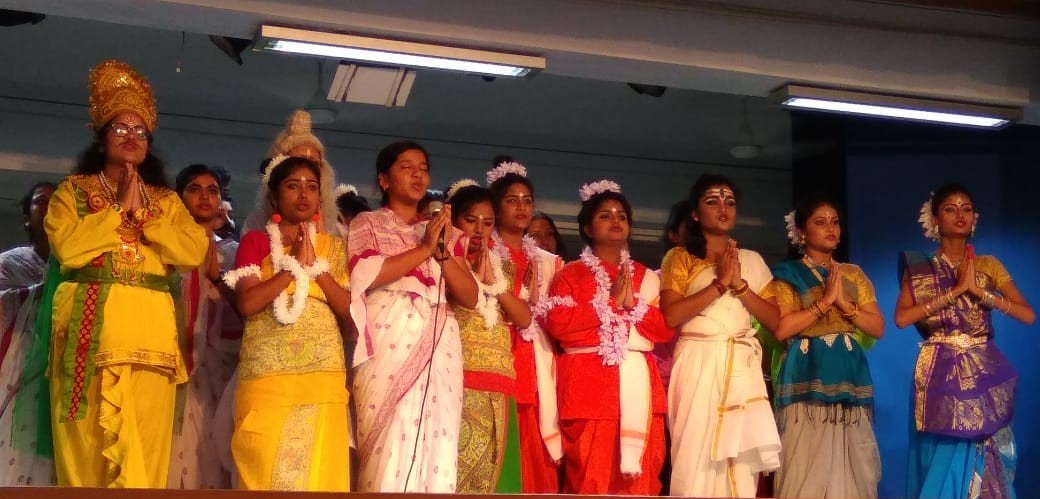
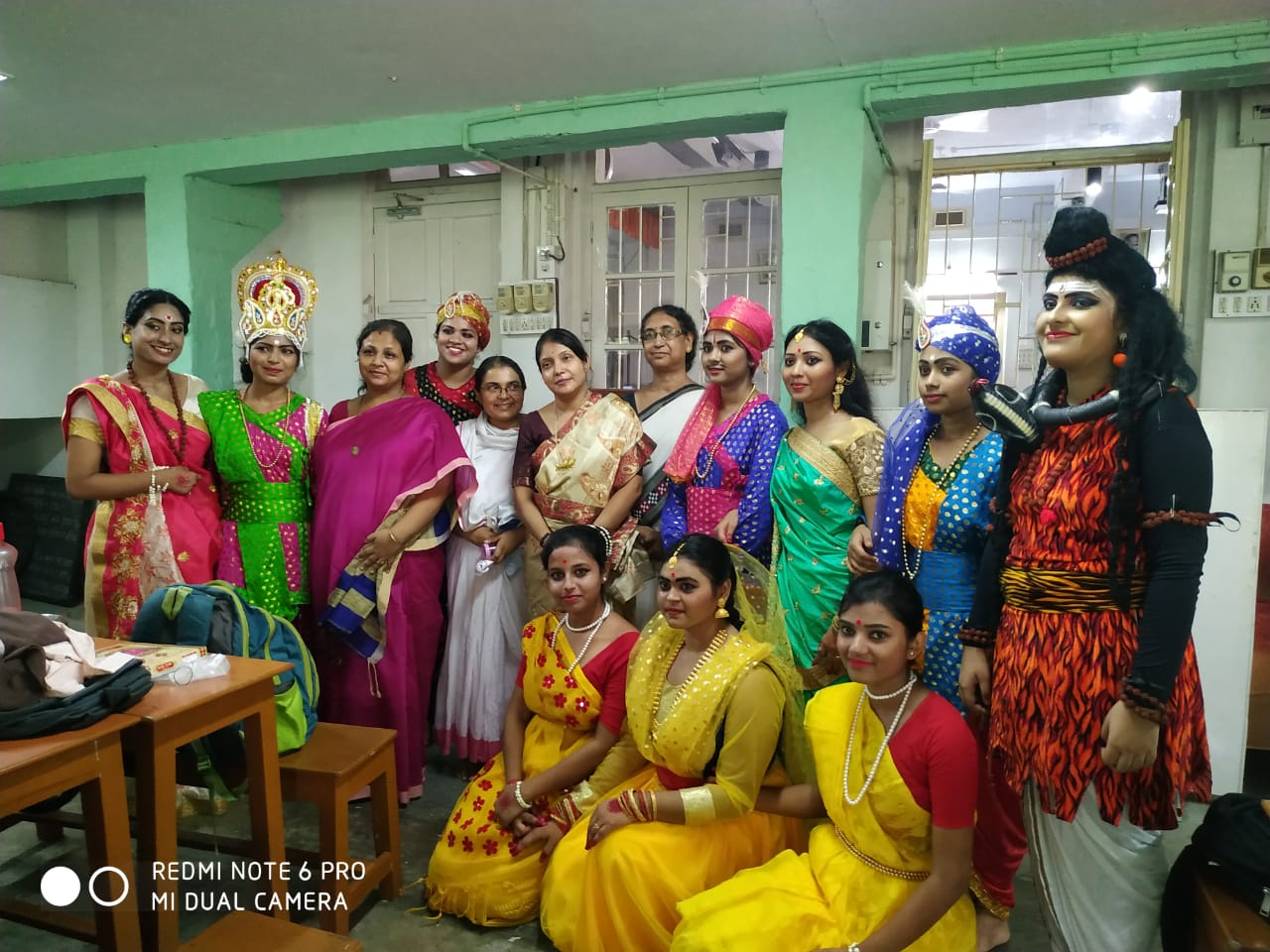
The esteemed faculty members of the Sanskrit department have, for the span of two decades, graced the celestial realm of academia with the resplendent celebration known as ‘Sanskrit Day’. This jubilant occasion, held upon the sacred tapestry of Rakshabandhan, stands as a testament to the timeless beauty and profundity of the ancient language. At the heart of this august fête lies the venerable publication of ‘Charaiveti’, the departmental magazine, a veritable treasure trove of erudition and enlightenment. Moreover, the ethereal ambiance is further enriched by a cultural extravaganza, meticulously crafted and exquisitely performed by the erudite disciples of our esteemed department.
Methods of Teaching
Infrastructure
The Department owns a Seminar Library full of reference books which is exclusively maintained by both the students and teachers. Apart from books, journals, wall magazines, hand-written projects, examination-copies of our rank holders and CDs have been kept here.
DEPARTMENT OF SANSKRIT
Programme and Course Outcome: Our approach
Courses offered
Bachelor of Arts in Sanskrit (Honours)
Skill Enhancement.
Syllabus For NEP
Syllabus For CBCS
https://wbsu.ac.in/web/Syllabus/UG%20Syllabus/SANSKRIT_HONOURS_CBCS_Draft_Syllabus.pdf
Department of Sanskrit
Programme Outcomes:
PO1: Communication Skills : Confident to speak, write, read, listen and understand the English language and one or more Indian languages. Relate the ideas, knowledge, books, and people. Think and decide rationally, and adopt technology and electronic/print media in disseminating thoughts, facts and realities.
PO2: Social responsibility: Develop an obligation to act for the benefit of society at large. Cultivate the responsibility to maintain a balance between the economy and the ecosystems. Nurture a moral obligation to minimize the adverse effect on those immediately around them.
PO3: Critical, logical and rational thinking: Acquire the ability for objective, rational, skeptical, logical, and unbiased analysis of factual evidences to form a judgment or conclusion. Enhance the process of rational thinking, problem solving and analytical evaluation from different perspectives.
PO4: Enlightened and effective Citizenship: Cultivate progressive citizenship for a knowledge society for peace and prosperity of nations and the world. Develop clear, rational and progressive thinking. Participate in decision-making concerning the society and upholding national development, integrity, unity and fraternity.
PO5: Values and Ethics: Recognize the importance, worth and usefulness of principles and standards of behavior and moral dimensions of one’s own decisions and judgements. Be aware of various aspects of social responsibility through social, outreach, and cultural activities during the programme. Shape a personality which understands and appreciates religious and cultural diversity and plurality.
PO6: Sustainable development: Understand, organize and promote the principle of human development goals by sustaining the ability of natural systems, natural resources and ecosystem services upon which the economy and society depends.
PO7: Life-long process of Learning: Cultivate the proficiency to engage in independent, life-long and progressive learning abilities in the broadest context of changing sociopolitico-economic-cultural and technological scenario.
PO8: Employment Skills: Be prepared for employment in various fields by developing reading, writing and comprehension skills which make the students fit and eligible for jobs in the government and non-government sectors. A broad spectrum study of various subjects helps the students compete in various examinations for employment after graduation.
Programme Specific Outcomes:
PSO1: To cultivate a profound understanding of ancient Indian society, philosophy and Sanskrit literature by drawing connections between the present and the past.
PSO2: To augment one’s communicative proficiency in Sanskrit across the modalities of listening, speaking, reading and writing
PSO3: To acquire expertise and professional skills for teaching and conducting research in various domains such as Sanskrit grammar, classical Sanskrit literature, Vedic literature, and ancient Indian philosophy.
PSO4: To grasp comprehensively the significance of Sanskrit’s multi-disciplinary literature, such as the Vedas, Kavyas, Vyakarana, Darsana, Dharmashastra, and Arthashastra.
PSO5: To establish a formidable groundwork conducive to the pursuit of postgraduate studies and allied disciplines, thereby fostering an enriched academic journey and scholarly exploration
Paper Name & Course Outcomes:
Major DS1 – Functional Sanskrit & Metre – This course will help students to understand the structure of Sentence and write in Sanskrit language. The knowledge of metre will help students to study Sanskrit poetry in future courses.
Major DS2 – History of Sanskrit Literature – This course will give the students an overview of History of Vedic Sanskrit literature, History of Classical Sanskrit literature and History of Scientific and technical Literature of Sanskrit.
Major DS3 – Sahitya – Poetics – This course will help the students to learn about technical details of Sanskrit drama and Alamkaras.
Major DS4 – Sahitya – Drama & Poetry – This course helps the students to know the story of Drama and Poetry.
Major DS5 – Sahitya – Drama & Prose – Students will learn about the story and dramatic excellence of Abhijnana-shakuntalam and the story of Shukanasopadeshah.
Major DS6 – Sahitya – Prose & Poetry – Students will learn about the story, prose, poetry and poetic excellence of Bana and Bharavi respectively.
Major DS7 – Dharma-Shastra – Students will learn about ancient India’s social system and polity.
Major DS8 – Paninian Grammar –
Vaiyakarana-siddhanta-kaumudi – This course will help the students to know about Bhattojidikshita’s explanation of the Panini sutras of Samjna, Paribhasha and Svara-sandhi.
Major DS9 – Vedic Studies – The students will know the Vedic literature and Grammar.
Major DS10 – Philosophy of Grammar & Linguistics – The students will know about the Philosophy of Grammar and Linguistics.
Major DS11 – Paninian Grammar – Formation of Subantas,
Tinantas & kritya-pratyayantas – The students will know about the formation of some Subanta, Tinanta and Kridanta terms.
Major DS12 – Paninian Grammar – Karaka & Samasa – Students will know about some selected Paninian rules of Karaka and Samasa along with the commentary of Bhaṭṭoji Dikshita.
Major DS13 – Veda – Nirukta & Upanisadas – This course makes the students aware of Nirukta and the philosophy of two selected Upanishads.
Major DS14 – Indian Philosophy – Vedanta & Nyaya-Vaishesika – The students will know about the basics of Nyaya-Vaisheshika philosophy and Vedanta Darshana.
Major DS15 – Sahitya – Alamkara-shastras – This course will help the students to know the basic knowledge about Alamkara-shastra.
Major DS16 – Veda – Vedic Hymns & Bhashya-bhumika – This course will help the students to know some Rigvedic hymns and the philosophical discussion stated in Rigveda-bhashya-bhumika of Sayanacharya.
Major DS17 – Indian Epigraphy, Paleography and
Chronology – Students will learn Indian Epigraphy, Paleography and Chronology.
Major DS18 – Sahitya – Poetics & Mahakavya – This course helps the students to know the theories of kavya-sastra, natya-sastra and will make them aware of modern plays.
Major DS19 – Indian Philosophy – This course helps the students to know the theories of Sankhya darshana, Yoga darshana and Mimansa darshana.
After completion of the course students will be able to:
| COS | Knowledge level
Bloom’s Taxonomy |
PSO1 | PSO2 | PSO3 | PSO4 | PSO5 | |
| CO1 | To get students acquainted with the rich heritage of Classical Sanskrit Poetry; to intend to give an understanding of the development of Sanskrit Literature.
|
Understand, analyse, know, acquire,translate | |||||
| CO2 | To get students acquainted with the journey of Sanskrit literature from Vedic literature to Purāṇa; to give an outline of different shastric traditions; to know the different genres of Sanskrit Literature and Śāstras
|
Understand, know, acquire, explain,analyse | |||||
| CO3 | To frame an idea of different types of Gadyakāvya, to get acquainted with the beginnings of Sanskrit Prose literature and Fables
|
Know, understand, explain, compare | |||||
| CO4 | To understand one’s true nature (Atman) and recognizing the distinction between the self and the body/mind complex; to embrace the concept of Nishkama Karma, or selfless action; to cultivate control over the mind and senses (Yama and Niyama) through practices like meditation (Dhyana) and yoga, leading to increased concentration and mental resilience
|
Know, understand, illustrate, study, determine | |||||
| CO5 | To gather knowledge about the Classical Sanskrit drama and to cherish its essence; to acquaint students with two most famous dramas of Sanskrit literature representing three stages in the growth of Sanskrit drama
|
Know, explain, acquire, translate | |||||
| CO6 | To enrich the students in Sanskrit Poetics; to enable them to recognise figures of speech and meters in Sanskrit Literature; to develop capacity for creative writing and literary appreciation
|
Know, elaborate, identify, compare | |||||
| CO7 | To make the students acquainted with various aspects of social institutions and Indian polity as propounded in the ancient Sanskrit texts such as Saṁhitās, Mahābhārata, Purāṇa, Kauṭilya’s Arthaśāstra and other works known as Nītiśāstra; to give an idea of the philosophy of Gāndhi (Gāndhibād)
|
Know, understand, explain, compare | |||||
| CO8 | To acquaint the students with the epigraphical journey in Sanskrit, the only source which directly reflects the society, politics, geography and economy of the time; to help students to know the different styles of Sanskrit writing.
|
Know, understand, identify | |||||
| CO9 | To make the students aware about the prose and plays written by Bengali authors in modern times like Yatindravimal Choudhury, Srijiv Nyayatirtha and so on; to expose students to the rich & profound tradition of modern creative writing in Sanskrit, enriched by new genres of writing; to acquaint the students with the contribution of Bengal in modern Sanskrit literature
|
Know, understand, explain | |||||
| CO10 | To know the contribution of Eastern and Western Scholars in Sanskrit literature
|
Know, understand, identify | |||||
| CO11 | To get knowledge about Vedic Mantras through prescribed texts;to be acquainted with peculiarities of Vedic Grammar
|
Know, understand, interpret, diagnose, assess | |||||
| CO12 | To acquire knowledge on Sanskrit Grammar; to gain a comprehensive understanding of the linguistic structures of Sanskrit, including its phonetics, morphology, syntax, and semantics; to trace the historical development of the Sanskrit language, understanding its evolution and relationship with other Indo-European languages; learn to apply modern linguistic theories and methodologies to the study of Sanskrit, bridging traditional philology with contemporary linguistic research
|
Know, understand, explain,differentiate | |||||
| CO13 | To get the students acquainted with the cardinal principles of the Nyāya-Vaiśeṣika philosophy through the Tarkasaṁgraha; to equip students with the skills to interpret and analyze philosophical texts written in Sanskrit
|
Know, understand, analyze | |||||
| CO14 | To enhance the writing skills of the students in Sanskrit language
|
Know, translate, exercise | |||||
| CODSE1 | To be acquainted with some special topics of Vedic Samhita, Brahamana and Upanishad; to learn various Stri Pratyayas as prescribed by Panini
|
Know, understand,
|
|||||
| CODSE2 | To get the essence of Indian spiritual knowledge and Upanishadic Truths;
to get a clear idea of Nyaya-Vaisesika philosophy
|
Know, understand, describe | |||||
| CODSE3 | To get an idea of poetical merit of Magha through Shishupalbadham; to be acquainted with the philosophical drama Yugajivanam by Rama Choudhury
|
Know, understand, explain | |||||
| CODSE4 | To gain detailed knowledge about the Vedic culture and Vedic studies in Bengal; to learn Sanskrit through computers with the study of Computational Linguistics
|
Know, understand, explain | |||||
| CODSE5 | To have the basic concept of Gouriya Vaishnab philosophy, Ramakrishna-Vivekananda philosophy and Shakta philosophy; to understand the comparative studies of Indian and Western logic
|
Know, understand, compare, distinguish | |||||
| CODSE6 | To gain the knowledge of poetical values of famous Bhattikavya and essence of grammar included in the text; to have clear conception of Kavya, different kinds of poets, riti etc.from Kavyalankarsutravritti by Vamana
|
Know, understand, acquire |
PO, CO Matrix:
| PO1 | PO2 | PO3 | PO4 | PO5 | PO6 | PO7 | PO8 | |
| CO1 | ||||||||
| CO2 | ||||||||
| CO3 | ||||||||
| CO4 | ||||||||
| CO5 | ||||||||
| CO6 | ||||||||
| CO7 | ||||||||
| CO8 | ||||||||
| CO9 | ||||||||
| CO10 | ||||||||
| CO11 | ||||||||
| CO12 | ||||||||
| CO13 | ||||||||
| CO14 | ||||||||
| CODSE1 | ||||||||
| CODSE2 | ||||||||
| CODSE3 | ||||||||
| CODSE4 | ||||||||
| CODSE5 | ||||||||
| CODSE6 |
Associate Professor
View Profile
Assistant Professor
View Profile
Monastic Faculty
View Profile| ACADEMIC CALENDAR | Download |
|---|---|
| ACADEMIC CALENDAR 2025 | Click Here | ACADEMIC CALENDAR July – December 2024 | Click Here |
| ACADEMIC CALENDAR 2023-2024 | Click Here |
| ACADEMIC CALENDAR 2022-2023 | Click Here |
| ACADEMIC CALENDAR 2021-2022 | Click Here |
| ACADEMIC CALENDAR 2020-2021 | Click Here |
| ACADEMIC CALENDAR 2019-2020 | Click Here |
| ACADEMIC CALENDAR 2018-2019 | Click Here |
| Routine | Download |
|---|---|
| NEP 1 SEM 2024 | Click Here |
| ODD SEM 2022 | Click Here |
| EVEN SEM 2022 | Click Here |
| OCT 21 – JULY 22 | Click Here |
| EVEN SEM 2021 | Click Here |
| ODD SEM 2021 | Click Here |
| EVEN SEM 2020 | Click Here |
| ODD SEM JULY-DEC 2020-21 | Click Here |
| JULY – DEC 2019 | Click Here |
| Lesson Plan | Download |
|---|---|
| LESSON PLAN SEM-3 NEP | Click Here |
| LESSON PLAN NEP-2023 | Click Here |
| LESSON PLAN SEM-2 NEP | Click Here |
| Study Materials | Download |
|---|---|
| 6 schools of Indian Poetics | Click Here |
| Ashvaghosha project | Click Here |
| Asoka’s Giranara Rock Edict-1 | Click Here |
| Asoka’s Saranatha Pillar Edict | Click Here |
| Bana project | Click Here |
| Bharata viveka | Click Here |
| Bhashar-Itibritta | Click Here |
| BU 4.5.1-15 | Click Here |
| CC4 GITA SECTION A | Click Here |
| Chatterjee datta_Introduction To Indian Philosophy | Click Here |
| Chipitaka Charvanam | Click Here |
| Dandin project | Click Here |
| Eran Pillar Inscription of Samudragupta | Click Here |
| Gita project | Click Here |
| Kalidasa Kumarasambhavam | Click Here |
| KIRATARJUNIAM | Click Here |
| Mundaka Upanishad | Click Here |
| Saptapadarthi | Click Here |
| Vyakarana Siddhanta Kaumudi Samas Prakaran | Click Here |
| পুরাণ | Click Here |
| মহাভারত | Click Here |
| রামায়ণ | Click Here |
| Sahitya Darpana | Click Here |
| Kavyalankara Sutra Vritti | Click Here |
Continuous Evaluations
The Department of Sanskrit has instituted a comprehensive system of continuous assessment for its students, comprising class work, class tests, and periodic examinations throughout the academic year. Demonstrating an unwavering commitment to nurturing the holistic development of its students, the department endeavors to cater to the diverse learning needs of both adept and struggling learners alike. To facilitate this, instructors diligently administer regular class tests, mock examinations, and internal assessments at frequent intervals. Notably, the department orchestrates strategic test sessions immediately preceding the final year examinations, affording students ample opportunity to adequately prepare themselves for the culminating academic assessments.
Sample question papers are given below.
| Continuous Evaluations | Download |
|---|---|
| IA Sem 1 | Click Here |
| IA CC5 2022 | Click Here |
| IA CC12 | Click Here |
| IA Sem5 DSE1 | Click Here |
| IA GE3 | Click Here |
| Mock Test, CC5 and CC6, 2024 | Click Here |
| Mock Sem5 2022 CC11&CC12 | Click Here |
| Mock Test, CC11 and CC12, 2024 | Click Here |
| Mock Test, GE 5, 2024 | Click Here |
Department of Sanskrit
Extension Lectures/ Interdisciplinary Seminars/ Webinars/ Workshops
July 2024 – June 2025
| SL. NO. | DATE | EVENT | RESOURCE PERSON | TITLE |
| 1 | 13 September 2024 | Online Sessions | Sri Buddhadev Das (Research Scholar, Dept of Sanskrit and Philosophy, RKMVERI, Belur Math) | Spoken Sanskrit Certificate Course
https://www.youtube.com/playlist?list=PLwEgtrrqXXtEEohGcV45fu7ULGxZnPvy7 |
| 2 | 16 November 2024 | Extension Lecture | Prof Taraknath Adhikari, Rabindra Bharati University | Unknown medical aspects of the Atharvaveda Samhita
|
| 3 | 28 February 2025 | Extension Lecture | Dr Sreeya Ghosh (Research Guide, SV Centre for Multidisciplinary Research in Basic Sciences & Social Sciences; Faculty, School of Languages & Computer Education, RKM SV Ancestral House & Cultural Centre) | Swami Vivekananda’s views on Devabhasha and allied areas
https://youtu.be/KzQ-Je5if3w?si=_y2R5Dxw-lcmUrw4
|
| 4 | 16 March 2025 | Interactive Session with Alumna (Batch 2017-2020) | Sm Basanti Pal (NET Qualified PhD Scholar (Sahitya) National Sanskrit University, Tirupati)
|
Career Counselling
|
| 5 | 5 May to 15 May 2025
|
Students’ Workshop | Sm Dipika Bhattacharya (Mathurapur Vikash Khanda Pramukh)
|
Introductory 10 day Spoken Sanskrit Workshop
https://youtu.be/ejwFWGymbEI?si=en_ETbKvwxNmHBsZ https://youtu.be/dwjrRHzA86Q?si=uwwcQ8qf5FRiI8J7 https://youtu.be/1sxANy6M2FU?si=htbyZ7NPSZgm0HgA https://www.facebook.com/share/p/192we1u9hC/
|
| 6 | 14 June 2025 – 24 June 2025 | Students’ Activity | Sanskrit Sahitya Parishat, 168/1, Raja Dinendra Street, Kolkata – 700 004 | Summer Internship Programme |
Educational Trips/ Literary Fest/ Meets & Fairs / Theatre Visits
July 2024 – June 2025
| SL. NO. | DATE | PLACE VISITED/ ACTIVITY | OBJECTIVE |
| 1. | 13 September 2024 | Sanskrit Divas
https://youtu.be/LShDDiFxDYo?si=Uh5uTP813lMOgja1
|
Our department organized a short cultural programme in Sanskrit and published our departmental journal Charaiveti to promote and celebrate the ancient language Sanskrit. |
| 2 | 30 January 2025 | Annual Excursion to Science City
|
To explore the evolution of the world, the journey of scientific progress to reveal the Universe and so on. All enjoyed the Space theatre show and the Time Machine ride. |
| 3 | 5 February 2025 | Visit to Book Fair
|
They gained an exposure to a vast collection of books and academic resources, understood new research trends in Sanskrit and interacted with authors. |
| 4 | 12 April 2025 | Heritage Visit to Sri Chaitanya Mahaprabhu Museum and RKSM Sister Nivedita Heritage Museum and Knowledge Centre
|
To watch the well preserved historical items of the Gaudiya Vaishnava sect in the Gaudiya Museum and the brought to life incidents of Sister Nivedita in her Museum. |
| Event Name | View |
|---|---|
| June 2025 – July 2024 | |
| Summer Internship Programme – 14 June 2025 – 24 June 2025 – Sanskrit Sahitya Parishat | View |
| Introductory 10 day Spoken Sanskrit Workshop – 5 May to 15 May 2025 – Sm Dipika Bhattacharya | View |
| Career Counselling – 16 March 2025 – Sm Basanti Pal | View |
| Swami Vivekananda on Devabhasha and Allied Areas – 28 February 2025 – Dr Sreeya Ghosh | View |
| Unknown Medical Aspects of Atharvaveda Samhita – 16 November 2025 – Prof Taraknath Adhikari | View |
| Spoken Sanskrit Certificate Online Course – 13 September 2024 – Sri Buddhadev Das | View |
Departmental Policy for Slow and Advanced Learners on the basis of minutes of departmental meeting held on 14/07/2022
At first identification of slow and advanced learners was done from class through class-response/performance of respective students within one month from the commencement of their classes. Moreover regular assessments, teacher observations and input from parents or guardians also help to identify the slow learners.
SLOW LEARNERS
ADVANCE LEARNERS
Attendance registers are prepared for semesters I, II & V and semesters II, IV & VI respectively. Assessment is given in the form of write-ups on important topics, classroom discussions on relevant parts of the syllabus, collaborative projects and individual home assignments. Question papers are also preserved for reference.
UNIVERSITY RESULTS
| YEAR | APPEARED | PASSED | 1ST CLASS | COLLEGE TOPPER | UNIVERSITY RANKS |
| 2017 | 2 | 2 | 2 | Payel Sana
(63.63%) |
8th |
| 2018 | 15 | 15 | 4 | Nandita Das
(66.25%) Arpita Sarkar (62.88%) |
4th
10th |
| 2019 | 13 | 13 | 3 | Madhumita Ghosh (67.75%)
Anuradha Baidya (63%) |
4th
8th |
| 2020 | 11 | 11 | 6 | — | — |
| 2021 | 12 | 12 | 11 | Ananya Bhattacharya (79.35%) | 9th |
| 2022 | 12 | 12 | 12 | Suparna Dey (87.45%)
Ipswita Jaman (86.41%) Arpita Adhikary (82.95%) |
1st
2nd
6th |
| 2023 | 7 | 6 | 6 | Katha Karmakar (86.1%)
Priyanka Mondal (81.45%) |
2nd
7th |
Result of CBCS System
Department of Sanskrit
| Year | Appeared | Passed | CGPA 6-7
60%-70% |
CGPA 7-8
70%-80% |
CGPA 8-9
80%-90% |
CGPA 9- 10
Above 90% |
University
Ranks(1st to 10th) |
| 2024 | 5 | 5 | – | – | 2 | 3 | ND |
| 2023 | 7 | 6 | – | – | 3 | 3 | 2 students |
| 2022 | 12 | 12 | – | – | 2 | 10 | 3 students |
| 2021 | 12 | 12 | 1 | 3 | 5 | 3 | 1 student |
2024
| Results of CBCS System | ||||||
| Year
2024 (Sem VI) |
Appeared | Passed | CGPA
6-7 (60% -70%) |
CGPA
7 – 8 (70% – 80%)
|
CGPA
8 – 9 (80% – 90%) |
CGPA
10 Above 90% |
| Barbi
Sarkar |
P | 8.47 | ||||
| Jayashree
Mondal |
P | 9.33 | ||||
| Mita Roy | P | 8.83 | ||||
| Priya Mondal | P | 9.37 | ||||
| Riya Bain
|
P | 9.16 | ||||
2023
| Results of CBCS System | ||||||
| Year
2023 (Sem VI) |
Appeared | Passed | CGPA
6-7 (60% -70%) |
CGPA
7 – 8 (70% – 80%)
|
CGPA
8 – 9 (80% – 90%) |
CGPA
10 Above 90% |
| Katha Karmakar | P | 9.66 | ||||
| Sujata Lohar | P | 8 | ||||
| Priyanka Mondal | p |
9.43 |
||||
| Antara Roy | P | 8.54 | ||||
| Shyama Rani Das | P | 9.1 | ||||
| Piyali Ghosh | P | 8.50 | ||||
2022
| Results of CBCS System | ||||||
| Year
2022
(Sem VI) |
Appeared | Passed | CGPA
6-7 (60% -70%) |
CGPA
7 – 8 (70% – 80%)
|
CGPA
8 – 9 (80% – 90%) |
CGPA
10 Above 90% |
| Arpita Adhikari | P | 9.53 | ||||
| Chumki Mondal | P | 9.11 | ||||
| Disha Mistri | P | 8.81 | ||||
| Ipswita Jaman | P | 9.76 | ||||
| Johita Koyal | P | 9.24 | ||||
| Mamoni Pahari | P | 9.14 | ||||
| Minakshi Das | P | 9.36 | ||||
| Rakhi Ruidas
|
P | 9.09 | ||||
| Sayantika Ghosh
|
P | 9.20 | ||||
| Sikha Jana
|
P | 9.16 | ||||
| Sulata Das
|
P | 8.66 | ||||
| Suparna Dey | P | 9.83 | ||||
2021
| Results of CBCS System | ||||||
| Year
2021 (Sem VI |
Appeared | Passed | CGPA
6-7 (60% -70%) |
CGPA
7 – 8 (70% – 80%)
|
CGPA
8 – 9 (80% – 90%) |
CGPA
10 Above 90% |
| Dipika Mondal | P | 8.63 | ||||
| Dolon Sarader | P | 7.96 | ||||
| Purnima Karan | P | 8.29 | ||||
| Riya Biswas | P | 8.21 | ||||
| Aditi Nath | P | 6.51 | ||||
| Hrittrisha Ghosh | P | 8.04 | ||||
| Mampi Pramanik | P | 8.27 | ||||
| Mrinmoyee Bera | P | 9.10 | ||||
| Nandita Ghosh | P | 7.92 | ||||
| TanushreeSadhukhan | P | 9.13 | ||||
| Amiya Chattopadhyay | P | 7.60 | ||||
| Ananya Bhattacharjee | P | 9.29 | ||||
STUDENT PROGRESSION
2018-19
| 2018-19 | Madhumita Ghosh | Jadavpur University | M.A in Sanskrit |
| 2018-19 | Suchismita Ghosh | Sanskrit College and University | M.A in Sanskrit |
| 2018-19 | Chaina Gorai | Bankura University | M.A in Sanskrit |
| 2018-19 | Anupama Santra | Biswanath Institute of B.Ed College | B.ED |
| 2018-19 | Rumala Pradhan | The Sanskrit College and University | M.A in Sanskrit |
| 2018-19 | Rinku Dolui | Rabindrabharati university | M.A in Sanskrit |
| 2018-19 | Barnali Mondal | WBUTTEPA (BibhutibhusanB.ed college) | B.ED |
| 2018-19 | Priyanka Mukherjee | M Hossian teacher training Institute | D. El. Ed |
2019-20
| 2019-20 | Manisha Mandal | District Institute of Education and Traning, Murshidabad | D.El.Ed. |
| 2019-20 | Saswati Mondal | Rabindra Bharati University | M.A. In Sanskrit |
| 2019-20 | Krishna Mukherjee | Front page Academy | D.El.Ed. |
| 2019-20 | Debasree Roy | Diamond Harbour Women’s University | M.A. in Sanskrit |
| 2019-20 | Tanusri Debnath | Prashanta Dasgupta College of Education | B.Ed. |
| 2019-20 | Pubali Chowdhury | WEST BENGAL STATE UNIVERSITY | M.A. In Sanskrit |
| 2019-20 | Barnali Pandit | WEST BENGAL STATE UNIVERSITY | M.A. In Sanskrit |
| 2019-20 | Basanti Pal | WEST BENGAL STATE UNIVERSITY | M.A. In Sanskrit |
2020-21
| 2020-21 | Ananya Bhattacharjee | Sanskrit College | MA in Sanskrit |
| 2020-21 | Dipika Mondal | Haritha college of Nursing, Kakinada, Andhra Pradesh. | Nursing |
| 2020-21 | Hrittrisha Ghosh | Kamakhya Institute of Education | D.El.Ed |
| 2020-21 | MampiPramanik | Diamond Harbour Women’s University | MA in Sanskrit |
| 2020-21 | Mrinmoyee Bera | WBSU | MA in Sanskrit |
| 2020-21 | Nandita Ghosh | Royal Keven’s Academy, Dumdum. | Studying for Wellness Advisor |
| 2020-21 | Purnima Karan | Dist Institute of Education and Training | D.El.Ed |
| 2020-21 | Riya Biswas | WB University of Teachers’ Training, Education Planning and Administration | B.Ed. |
| 2020-21 | Dolon Sarader | Rabindra Bharati University | MA in Music |
| 2020-21 | Tanusree Sadhukhan | Diamond Harbour Women’s University | MA in Sanskrit |
| 2020-21 | Amiya Chatterjee | BhandarhatiIndranidevi Institute of B.Ed. | B.Ed |
2021-22
| 2021-22 | Suparna Dey | Sarojini Naidu College for Women. | M.A. in Sanskrit |
| 2021-22 | Arpita Adhikary | West Bengal State University | M.A. in Sanskrit |
| 2021-22 | Ipswita Jaman | Jadavpur University | M.A. in Sanskrit |
| 2021-22 | Rakhi Ruidas | Sanskrit College and University | M.A. in Sanskrit |
| 2021-22 | Disha
Mistry |
West Bengal State University | M.A. in Sanskrit |
| 2021-22 | Sikha
Jana |
Vidyasagar
University |
M.A. in Sanskrit |
| 2021-22 | Johita Kayal | West Bengal State University | M.A. in Sanskrit |
| 2021-22 | Minakshi Sadhukhan | Dr. B. R. Ambedkar College of Education | B.Ed |
2022-23
| 2022-23 | Katha Karmakar | The Sanskrit College and University | M.A in Sanskrit |
| 2022-23 | Sujata Lohar | Burdwan University | M.A in Sanskrit |
| 2022-23 | Piyali Ghosh | M. Hossain Teachers’ Training Institute | B.Ed. |
2023-24
| 2023-24 | Priya Mondal | Murshidabad University | MA in Sanskrit |
| 2023-24 | Riya Bain | Jadavpur University | MA in Sanskrit |
Co-curricular Awards
| SESSION | NAMES | RANK | EVENT |
| 2023 | Barbi Sarkar | 2nd | Sanskrit Recitation |
| Sujata Lohar | 3rd | Sanskrit Recitation | |
| Jayashri Mondal | 1st | Online Quiz on Swami Vivekananda | |
| Priya Mondal | 2nd | Poster Competition on Women Empowerment-2nd | |
| 2022 | Katha Karmakar | 3rd | Sanskrit Recitation |
| 2021
|
Katha Karmakar | 1st | Sanskrit Recitation |
| Sourima Tapadar | 2nd | Sanskrit Recitation | |
| Sarulata Malik | 3rd | Sanskrit Recitation |
Students at College Sports
2021-22
23 February, 2022 – ANNUAL SPORTS
| Sl. No. | Name of Student
|
Award/ Recognition within College |
| 1 | Antara Roy,
Sujata Lohar, Priyanka Mondal |
Relay Race – 2nd |
| 2 | Antara Roy | Run (80mt) – 2nd |
| 3 | Sujata Lohar,
Priyanka Mondal |
Three legged run – 2nd |
| 4. | Anjali Sabar | Run(100mt)-2nd
Run(80mt)-1st |
| 5 | Priyanka Mondal | Obstacle race – 2nd |
Students at College Sports, 2023
| Sl. No. | Name of Student
|
Award/ Recognition within College
|
Award/ Recognition outside College
|
| 1 | Dipali Majhi | College Annual Sports
Event: Relay Race-2nd |
|
| 2. | Antiva Das | College Annual Sports
Event: Discus Throw-2nd |
|
| 3. | Priya Mondal | College Annual Sports
Event: Musical Chair -2nd |
|
| 4. | Barbi Sarkar | College Annual Sports
Event: Go as you like -3rd |
|
| 5. | Sujata Lohar | International Karate Championship
Kumite-2nd Kata-3rd |
23-24 March 2022 – Srijani Annual Fest
| Sl. No. | Name of Student
|
Semester, Roll No. | Award/ Recognition within College
|
| 1 | Katha Karmakar | 1stsem,
Roll-197 |
1st in Sanskrit Recitation |
| 2 | Sourima Tapadar | 1st Sem
Roll-197 |
2nd in Sanskrit Recitation |
| 3 | Sarulata Malik | 1st Sem
Roll-197 |
2nd in Sanskrit Recitation |
2023-24
| NAME | NAME OF THE AWARD/ MEDAL | TEAM / INDIVIDUAL | LEVEL OF COMPETITION (UNIVERSITY/STATE/NATIONAL/ INTERNATIONAL) |
| Antiva Das | Third Prize – Bronze Medal – Kata | Individual | NATIONAL OPEN KARATE CHAMPIONSHIP 2024
(16-17 March 2024) |
| Antiva Das | Second Prize – Silver Medal – Fighting | Individual | NATIONAL OPEN KARATE CHAMPIONSHIP 2024
(16-17 March 2024) |
Details of Seminar Presentation for the Semester/ Session: 2020-21
| SEMESTER
|
DATE | TOPIC | NAME OF THE STUDENT |
| I | 14th
February 2021 |
Variety of Poetic Schools | Priyanka Mondal
|
| II | 14 June 2021 | Gītā: Self-management through devotion | Katha Karmakar
|
| III | 16 Oct 2020 | Poetic style of Kalidasa as portrayed in Abhijňāna-śākuntalam | Ipshita Jaman
|
| IV | 13 May 2021 | Modern Sanskrit Literature in Bengal
|
Suparna Dey
https://youtube.com/shorts/hni8253CJU0?feature=share
|
| V | 1 March 2021
|
Agni-sukta | Mrinmoyee Bera
|
| VI | 2 July 2021 | Sharat-varnana in Bhattikavyam
|
Ananya Bhattacharya
|
Details of Seminar Presentation for the Semester/ Session: 2021-22
| SEMESTER | TOPIC | DATE | NAME OF THE STUDENTS |
| I | Parvati-tapasya in Kumāra-sambhavam: Canto-V | 26th November 2021 | RIYA BAIN
|
| II | Character of Anantavarma in Viśrutacaritam
|
2nd May 2022
|
PRIYA MANDAL
|
| III | Śabda-śakti
|
26th October 2021 | ANTARA RAY
|
| IV | Chipitaka-charvanam
|
3rd May 2022 | PIYALI GHOSH |
Videography –
https://youtube.com/@dishamistrivlogs?si=R0M28HE57bYIat59
https://youtube.com/@krishnamurari23716?si=620WmIewmt_OPMoU
https://youtube.com/@artstore456?si=caYapWorRLSyDWyQ
https://youtube.com/channel/UCim1udRDjwuo6w70bsA9B8g?si=0oM0iTkW8qYb8_jG
https://youtube.com/@butterflycreationswithriya?si=5U4XNztWRhbdxVNS
The students of the Sanskrit Department run a Youtube Channel.
https://www.youtube.com/channel/UCdbjWfp0vURrrQiPefL4H_g/videos?view=0
Students contribute enthusiastically towards the Annual Magazine of the Sanskrit Department ‘Charaiveti’.
Charaiveti 2024
Charaiveti 2023
Charaiveti 2022
Charaiveti 2021
Charaiveti 2020
Charaiveti 2019
Charaiveti 2018
Charaiveti 2017
Our Achievers
| Year of Passing | Name | Employer | Position |
| 2019 | Sonali Nandi | HDFC Life | Life Advisor |
| 2012 | Susmita Saha | Sree Chaitanya Mahavidyalaya | SACT-1 |
| 2018 | Anindita Chakraborty | Tata Consultancy Services | |
| 2018 | Jaya Mondal (May 2022) |
RKSM Khonsa School | Teacher |
| 2018 | Sonali Barman (May 2022) |
RKSM Khonsa School | Teacher |
| 2018 | Keya Das (May 2022) |
RKSM Khonsa School | Warden |
| 2018 | Puja Ghosh (May 2022) |
RKSM Khonsa School | Warden |
| 2019 | Suparna Adhikary | Ujjivan Small Finance Bank | Cashier |
| 2018 | Arpita Sarkar | Ujjivan Small Finance Bank | Cashier |
| 2018 | Nandita Das | Ujjivan Small Finance Bank | Cashier |
| 2022 | Pubali Choudhuri | Digitech call system Pvt.Ltd. | Tele-caller |
| 2022 | Mamoni Pahari
|
Digitech Call System Pvt.Ltd.
|
Resident support executive |
| 2022 | Suparna Dey | International Travel & Tourism Company | P.R. Manager |
| 2023 | Priyanka Mondal | Tata Consultancy Services Limited, TCS House, Raveline Street Fort, Mumbai 400 001, Maharashtra | Trainee BPS |
| 2024 | Jayasri Mondal | HDB Financial Services Limited, 2nd Floor, Wilson House, Old Nagardas Road, Near Amboli Subway, Andheri East, Mumbai – 400 069 | Senior Telecalling Officer |
LIST OF STUDENTS QUALIFYING IN NET/ SET WITH DETAILS
| Year | Name of the student |
| 2024 | Basanti Pal (NET) |
| 2023 | Madhumita Ghosh
(NET with JRF)) |
| 2022 | Udita Barman (NET & WBSET) |
| 2022 | Madhumita Ghosh
(WBSET) |
| 2019 | Harapriya Hati (NET) |
| 2017 | Harapriya Hati (NET) |
| 2018 | Susmita Saha(NET) |
SUSMITA SAHA
Batch 2011-14
State Aided College Teacher, Sree Chaitanya Mahavidyalaya
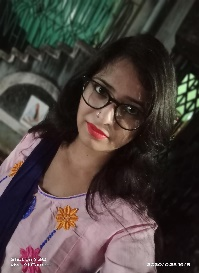
I am Susmita Saha, an ex-student of Ramakrishna Sarada Mission Vivekananda Vidyabhavan from the department of Sanskrit of the session 2011-14. I consider myself very lucky to have spent the most important three years of my life here. This college has provided me an environment that has helped me in enriching myself spiritually, intellectually, and morally as an individual. Different type of activities and vivid field-oriented competitions arranged by the college have also helped me increasing my confidence and abilities as an individual. Rules and regulations, environment of this college have helped us in concentrating on our studies with prior focus. All teachers of this college are very affectionate, helpful and they are highly qualified, very efficient as well as proficient in their teaching method. The journey from my first day of my college till the day I passed out was really a wonderful learning experience of my life as a student with a bank of enriched knowledge. This college has helped us to realise the real essence of Sanskrit as a subject in academic field and its application in shaping character of an individual. All lectures provided by our faculty were very informative, relevant as well as illustrative. They are our real mentors. They helped us in learning to solve any sort of problem. The financial support given by the college helped me in continuing my studies smoothly without any constraint. The Department faculty arranged all sorts of books, necessary study materials required for my studies. Along with academic activities, other co-curricular activities arranged by our department like Sanskrit Day observation, Magazine publishing (‘चरैवेति’’) also helped me in growing as an individual and have increased my confidence for future phase of my life. This journey of three years as a student has gifted me a different individual as a learner, as an educator and most importantly as a human being. Now I am a State Aided College Teacher at Sree Chaitanya Mahavidyalaya. This college has strengthened my footstep for next phase of my life as an educator. Now, whenever I teach my students, I always try to follow my college teachers, their values, their ethics, and their teachings.
ANINDITA CHAKRABORTY
Batch 2015-18
TCS, Process Associate (since November 2018)
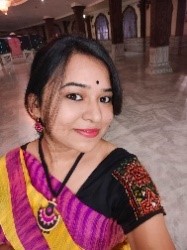
I am extremely fortunate to have studied at RKSMVV, the college of Swami Vivekananda’s dreams. College life was an altogether different experience. The education, culture and tradition of this college stand out from that of others. The subject of my graduation, Sanskrit, is not related to my occupation but it guides me indirectly. The eternal life-values as learnt from this college will nourish me life-long.
The faculty of the department of Sanskrit is very helpful. We never had any doubts about the completion of our syllabus ever. The teachers also discussed many supplementary topics to augment our scope. We could approach them with almost every issue. The teachers of other departments were also equally encouraging. We used to attend seminars of other departments to enlarge our exposure. My experiences in the department, college and hostel are unique because they are all rooted in Thakur, Ma and Swamiji. Glory unto them…
| Dr. Suchismita Khanra (Joardar) Assistant Professor, Department of Sanskrit Victoria Institution (College) Kolkata | |
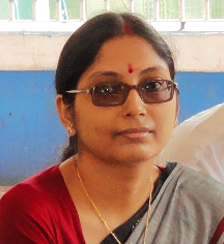 |
I am proud to be an alumnus of Ramakrishna Sarada Mission Vivekananda Vidyabhavan. It is not merely an academic institution, but a temple of learning for me. I found profound bliss in the lush greenery of the college campus as well as in the serenity and the politics-free environment. The disciplined college life, the well-stocked library and above all the student-teacher bonding offered an excellent academic atmosphere. Not only the syllabus-oriented lessons, but also the daily Morning Prayer, the cultural activities throughout the year and the moral lessons enriched me a lot and helped me greatly to become a better version of myself. I can hardly forget the individual attention, immense support and continuous inspiration that I had received from my teachers. I express my sincere gratitude to my teachers, because of whom I have become what I am today. I feel, indeed, lucky enough to be a member of the Vidyabhavan-family and I shall cherish the sweet memories of the golden years of my precious college-life forever. |
| Question Paper | Download |
|---|---|
| 2026 – Odd Semester (Sem 1, 3, 5) | Click Here |
| 2025 – Even Semester (Sem 2, 4) | Click Here |
| 2025 – Odd Semester (Sem 1, 3) | Click Here |
| 2024 – Even Semester (Sem 2) | Click Here |
| 2024 – Odd Semester (Sem 1) | Click Here |